
The beauty of nature


3 Things to Know Before Travelling to Venezuela

Venezuela; a vast, largely unexplored country famed for it’s towering peaks, tumbling falls and insane inflation. Almost everybody I met told me not to travel to Venezuela, some people even made it their mission in life to scare me out of visiting this amazing country. Despite all of the out of date Venezuela travel guide’s that I read, all of the information and mis-information, that was thrown at me, there were 3 facts about Venezuela which nobody bothered to tell me…
1. Venezuelans are incredibly friendly

I didn’t really know what to expect from Venezuelans themselves; they do, after all, live in a politically unstable country where riots, food shortages, rampant inflation and crazy politicians are pretty much the norm. Sure, Venezuelans may not be that keen on you at first; after all, you are a comparatively loaded traveller making the most out of their dire economic situation in order to fuel your lust for adventure. You probably don’t speak perfect Spanish. Do not let that deter you, once you actually get chatting to Venezuelans, especially some of the younger generations, you will find that they are warm, incredibly hospitable and almost always up for a good time; the amount of on-the-spot offers I had to go off on an adventure were truly staggering and the Couchsurfing community in Venezuela is one of the best I have ever encountered…
So, that’s that people – be sure that when thinking about travelling to Venezuela you take everything you hear, even from me, with a pinch of salt. There is a hell of a lot of conflicting information out there and, heck, if you really want to learn the truth – just go. Pack your bag, book that flight, be smart, be safe and learn the truth about one of the most stunning, bewildering, exhilarating and beautiful places in the world. Peace, out.
2. Venezuelans’ want to chat about Politics

Caracas City, Venezuela
I was extremely surprised to find out that most of the Venezuelans I had the pleasure of bumping into were more than up for discussing the political situation in the country. I spoke to die-hard Chavistas, left-wing protestors and everybody in between; the one thing they all had in common was that they were extremely grateful to have somebody listen to their side of the story. On numerous occasions, Venezuelans themselves would actually initiate the conversation which was not what I had expected. In the past, when visiting ‘dangerous’ countries, I have found locals to be very quiet when it comes to discussing their government due to an inherent fear of reprisals. Venezuela was refreshingly different and I felt that, despite the huge amounts of conflicting information thrown at me, I came away from the country with a better understanding of what is actually going on.
3. Powdered Milk is more expensive than an internal flight

I had been warned in advance that getting toilet paper in Venezuela was a real pain in the ass (ha!) to get and that one would have to queue for hours in order to buy some. It turns out that you can actually get toilet paper relatively easily on the black market but that, for a pack of 12, you would end up paying a fair whack. Even more expensive was powdered milk, which is one of the main illegal imports from Colombia and could cost up to $6 for a 2 kilo bag if bought on the black market. A one hour internal flight, on the other hand, comes in at around the $5 – $8 mark. Sure, the planes may have been terrifyingly juddery (tiny planes with propellers) but heck, they sure are cheap!
3 Things to Know Before Travelling to Romania

Romania seems to be in the midst of a tourism resurgence, with visitor numbers growing the last few years after a sharp decline a decade ago. This is nothing but good news, as this Eastern European nation is able to captivate travellers with its old-world charm and natural beauty. I think those that decide to venture to this intriguing country will come away smitten, just as I have. While there’s plenty to say about this diverse and wonderful country, here are 9 things I think you should know before visiting Romania to make your time here easier and more enjoyable.
1. Getting Around when Visiting Romania
For those looking to explore Romania using public transport, you’re in luck. Romania has a fairly extensive network of trains, buses and minibuses that can take you most (but not all) places. To help you navigate the public transport network, the Autogari website will show you all the options available to you and I swear by it. I found it to be one of the most comprehensive transport sites I’ve seen and it never let me down once.
Starting with rail, the train network stretches across the entire country and connects through Hungary to most of Western Europe. Most of the time, trains have allocated seating but this seems to be very loosely followed. Unfortunately, due to significant construction works on many stretches of the train network, expect delays and fairly serious ones at that.
The network of buses and minibuses that run throughout the country is generally faster and still great value for money. You may have to switch buses for longer routes, but again trust in Autogari, it will tell you all that. Tickets for intercity buses/minibuses are bought at the station office and for local buses, you buy them from the driver.
It’s worth noting, that in nearly every major city and town, the bus and train stations are usually several kilometres from the city centre. This brings me to my next point.
2. Vlad the Impaler

It would be fair to say that Vlad the Impaler may be the most well-known Romanian internationally. A historical figure who was used as inspiration for an icon of pop culture in Dracula, Vlad Tepes comes up a fair bit when travelling around the country (see here and here). The thing is, the people of Romania seem fairly ambivalent about this medieval Prince outside of the draw he has on tourists.
In fairness, it makes sense. As a historical figure, Vlad Tepes was not an incredibly successful or long-lasting ruler. He is best remembered for his particularly vicious approach to impaling his enemies – the Ottomans – and less so for his actual time as ruler. Vlad was actually only Voivode (roughly a Duke) for 6 short years that ended in defeat at the hands of the Ottomans and his imprisonment. He was later released and managed to reclaim his throne, only to be killed a year later under unclear circumstances.
So while this 15th century ruler may be quite interesting to historians and history lovers (eg. me), he’s not all that relevant or important to modern Romanians.
3. Diversity of Sights

It seems to be the case that often when people visit Romania, they only make time for Bucharest before venturing onward. While Bucharest is a fascinating city with plenty to see, it’s certainly not representative of the whole country. In Bucharest you will see the lasting impact of communism through its buildings and layout, but that’s not the case in other places. In the city of Sibiu and the town of Sighișoara, instead you’ll find charming medieval old towns that show what the towns looked like hundreds of years ago. Different again is the Baroque and Art Nouveau architecture of Oradea, a city on the western border of Hungary.
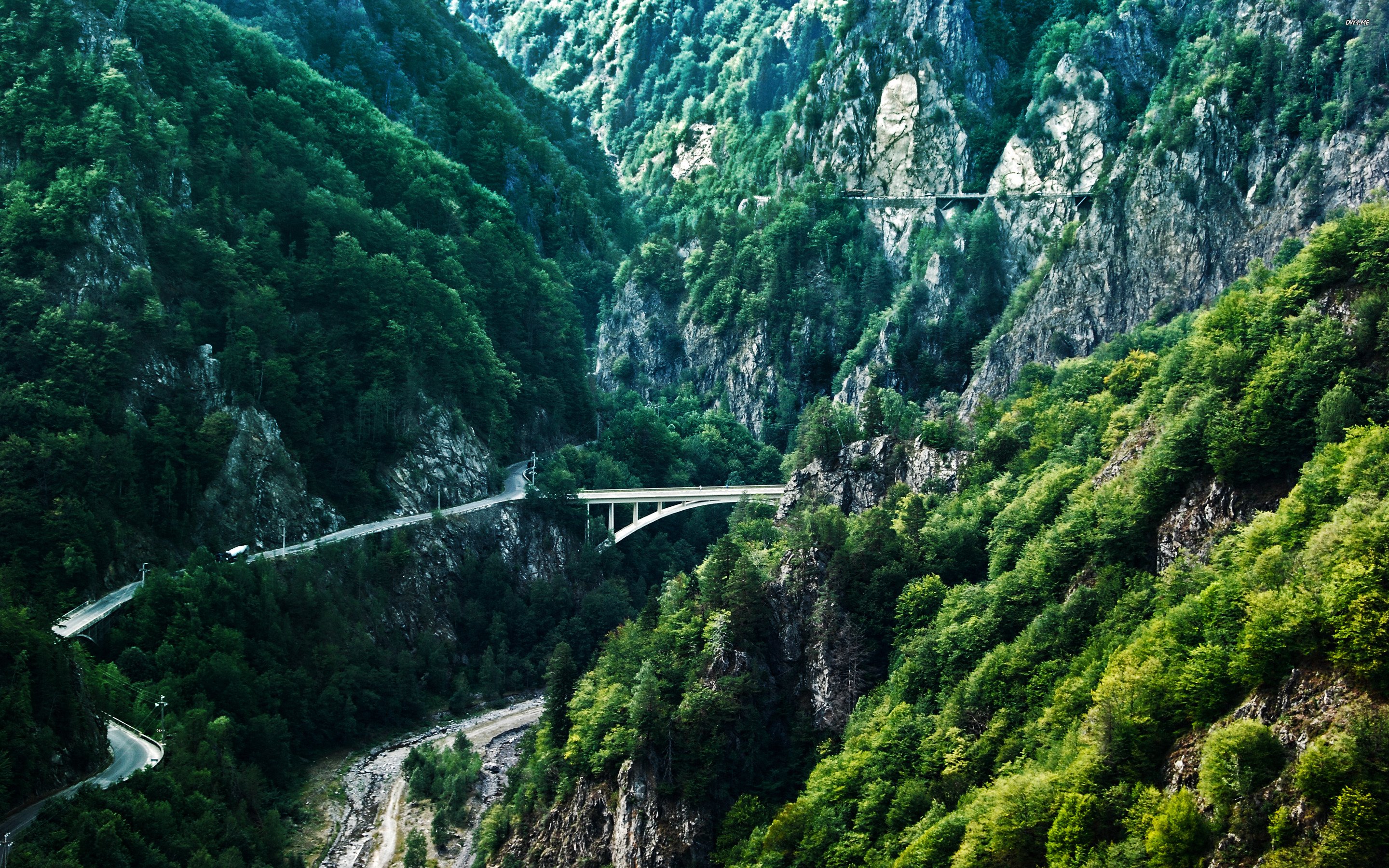
And it’s not just the cities and towns that are different. The landscape changes wildly depending on where in the country you visit. You have the huge and dramatic Carpathian Mountains near Brașov in the centre of the country; there’s the tranquil rolling hillsides of the northern Maramures region; the vast plateaus and plains like the one Bucharest is found in; and the coastline by Constanţa on the Black Sea. Basically, if you have the option to spend a little more time visiting Romania, take it so you can see more of what the country has to offer.
Goodbye!
3 Things to Know Before Travelling to Russia

1. Money Matters

Even after you’ve worked out your rubles from your euros, there’s still a lot to wrap your head around with the Russian currency.
They’re slowly working their way into a cashless economy like many other parts of the world, but there’s still a long way to go.
Cards are still not accepted in a wide range of businesses, so it’s a good idea to always have some cash on you wherever you go. You should also be aware that prices are often higher if you’re a foreigner, particularly in touristic places, such as the Red Square.
2. Getting Around Russia

Easily the best way to get around both Moscow and St Petersburg is the metro. It’s the largest urban metro system in the world, and relatively easy to navigate if you pay attention.
Most signs and announcements for stations are in Russian, so it’s not always easy to tell what station you’re at. Fortunately, there’s an app available, the Moscow Metro Route Planner, which is easy to use and track as you move, telling you when your station is coming up and when to get off.
Also, during peak times the metro stations turn into the pure chaos of one enormous Russian hurry. Stay to the right and out of people’s way while you navigate the station and I promise you’ll make it out alive.
3. Local Customs & Etiquette

Respect is paramount in Russia. Most locals won’t understand the gently mocking sense of humour you might be used to back home – so it’s best to leave that at the airport.
Additionally, don’t put your hands in your pockets in churches and the Lenin Mausoleum, and try to adopt a more sombre tone to your voice, keeping it low and respectful at all times.
Similarly, the elderly are extremely respected in Russian society, so expect to have a little headscarved babushka (grandmother) push in front of you in queues, and demand your seat on the metro. Just go with it. No one will take your side in that argument.
Thanks for reading!
3 Things to Know Before Travelling to Japan

Simply put, Japan is a fascinating destination. Here, you’ll find a seamless blend of old traditions and new technology. You’ll also discover gorgeous natural landscapes just a short train ride from sparkling, sprawling cities and loud, jarring outlets a short distance from quiet areas full of nuanced rules. It’s the kind of place where people will wait patiently in line for water after a natural disaster, but socially ghost you if you accidentally offend them. With a culture and language so distinct, it’s tough to list all the things you should know before heading to Japan. We could spend hours describing the country’s spectacular cuisine, listing the top spots to get ramen, sharing all the hidden gems, and explaining the different ways you’re likely to accidentally offend someone. However, for now, we’re sticking to the basics: all the things we think you need to know to help make sure your trip to Nippon is fun and only full of good surprises. Oh, and hopefully we’ll help you save some money along the way, too. Here are 24 things every traveler should know before going to Japan.
1. You won’t always find an English translation.

Speaking of eating out, be prepared to encounter menus and signs with no English translations. If you are in tourist-heavy spots, especially in Tokyo, this won’t be a problem. However, once you venture outside of the major tourist hot spots, it’s common to see solely Japanese. This is where your list of Japanese words will come in handy, especially in restaurants. While many places will attempt to rectify this with pictures, it’s still hard to tell what a miso-katsu is. If you don’t have a list and there are no pictures, you can always pick a place with plastic versions of the menu items displayed in the window, and at the very least, point to what you want.
2. Speak quietly in public.
Watching the volume of your voice — and the content of your conversation — is extremely important in Japan. Everyone in Japan is aware of the fact that they are sharing space with others, so keeping conversations to a minimum and voice levels at a low volume in public is always appreciated.
3. Try a ryokan for a traditional Japanese hotel experience.

If you are looking for a unique Japanese hotel experience, check into a traditional ryokan for a night or two (or more). Originating in the early 17th century Edo period, ryokans are Japanese inns where you’ll sleep on tatami mats rolled onto the floor, sample a traditional Japanese set breakfast, and probably have communal bathing facilities. The latter isn’t for the shy or modest; it’s a fully naked locker room experience where you sit on a stool in front of a vanity and bathe with a shower nozzle. We highly recommend this experience for at least a night in Nippon.
Goodbye!
3 Things to Know Before Travelling to South Korea

City of Seoul Korea
1. How many days is enough for a Korea holiday trip?
My trip was actually 8 full day. In this trip, we joined the K Shuttle tour from US Travels for 3 days, it brought us along the route from Seoul to Busan, hopping cities like Buyeo, Jeonju and even Gwangju! We had 2 days in Busan, and another 3 days in Seoul.
I know I’ve missed out quite a lot, like the famous Jeju Island which takes a lot of time to reach, and many other iconic places. I think, ultimately, it depends on your main purpose of visit. Ask yourself if you are visiting for the scenery, cultural experiences or more of shopping. I find 8 days enough, but 10 days could have been better so that I can touch on more places like Gamcheon Culture Village in Busan and Bukchon Hanok Village in Seoul. If you’re here solely for shopping, 8 days are more than enough!
Also read: 15 Unique Experiences Every Traveller Should Have in Korea
2. Language

The official local language is of course Korean. However, be prepared that most of the vendors do not speak English, even in touristy areas. If you’re a Chinese, you can still understand a little as they know a few Chinese characters like the price of their merchandises. If you’re not, you may have to start doing some hand language with them.
Unfortunately, most of the locals can only understand a little bit of English and they can hardly converse with you in English.
3.The locals

The locals can be both nice and rude, I don’t deny. Be warned that some of the locals, especially the older generation, can be really aggressive. I wish someone had warned me about this beforehand because I was quite shocked and upset when I experienced people shoving me aside at a crowded place, elbowing me just because I sat too close to him on the train and many other incidents. What I do know is that it’s a custom that the Korean older generation naturally expects the younger generation to respect them, but I don’t think this is how to ask for it.
In all honesty and fairness, there are many more friendly Koreans out there. Many times we met nice Koreans who exchange conversations with us, a taxi driver who was glad to have us as his first Singaporean passengers and a kind soul who helped us flag a cab after chatting with us. I’m thankful for all these nice people, so here’s a shout out to you guys in Korea!
Goodbye!
Thanks for reading! ❤
 Maria's vlog